








Quick answer: In 2026 a plumber in Midrand typically costs R400-R900 per hour (published average around R600/hour). Common jobs: tap repairs R500-R800, toilet repair around R1,200, geyser repair R3,500-R4,500, geyser replacement R5,000-R15,000, blocked drain clearing R500-R1,500, leak detection around R600/hour, and emergency call-outs R600-R1,300/hour. Always get an itemised written quote before work starts.
Plumbing is priced two ways, and knowing which way your job is priced is half the battle. Every figure below is a published benchmark or a provider-published rate from our 2026-09-30 research - never an invention, and never a quote. Your final price is set by the provider after assessing your specific job; these ranges are what you compare it against.
How plumbers in Midrand price their work
Hourly (R400-R900 published, average around R600) applies to diagnostic-heavy, open-ended work - leak detection, unknown faults, emergency call-outs, commercial jobs. The spread inside the range maps to real differences: standard daytime rates for routine work sit at the bottom, senior and specialist rates (geyser specialists, leak-detection crews, commercial teams) at the top, and night, weekend and public-holiday call-outs bill at the separate R600-R1,300/hour emergency rate. Fixed all-in applies to the known jobs, where the scope is predictable and the quote should not move. The discipline that protects you: a fixed quote stays fixed (a scope change is a new quote, not a new line item), and an hourly rate is confirmed in writing before the clock starts - including when the clock starts, and whether it changes after 17:00. On the call-out fee, Midrand practices genuinely vary: some operators advertise none, at least one publishes a flat R350 covering inspection and diagnosis - a transparent model worth asking for anywhere. What is a red flag is discovering a call-out fee on the final invoice without having agreed to it.
The published job-by-job ranges
| Job | Published range (2026) | Pricing model |
|---|---|---|
| Plumber's time (standard) | R400-R900/hour (average ~R600) | Hourly |
| Emergency call-out | R600-R1,300/hour | Hourly (night/weekend rate) |
| Tap / minor repairs | R500-R800 all-in | Fixed |
| Toilet repair | around R1,200 | Fixed / quote-specific |
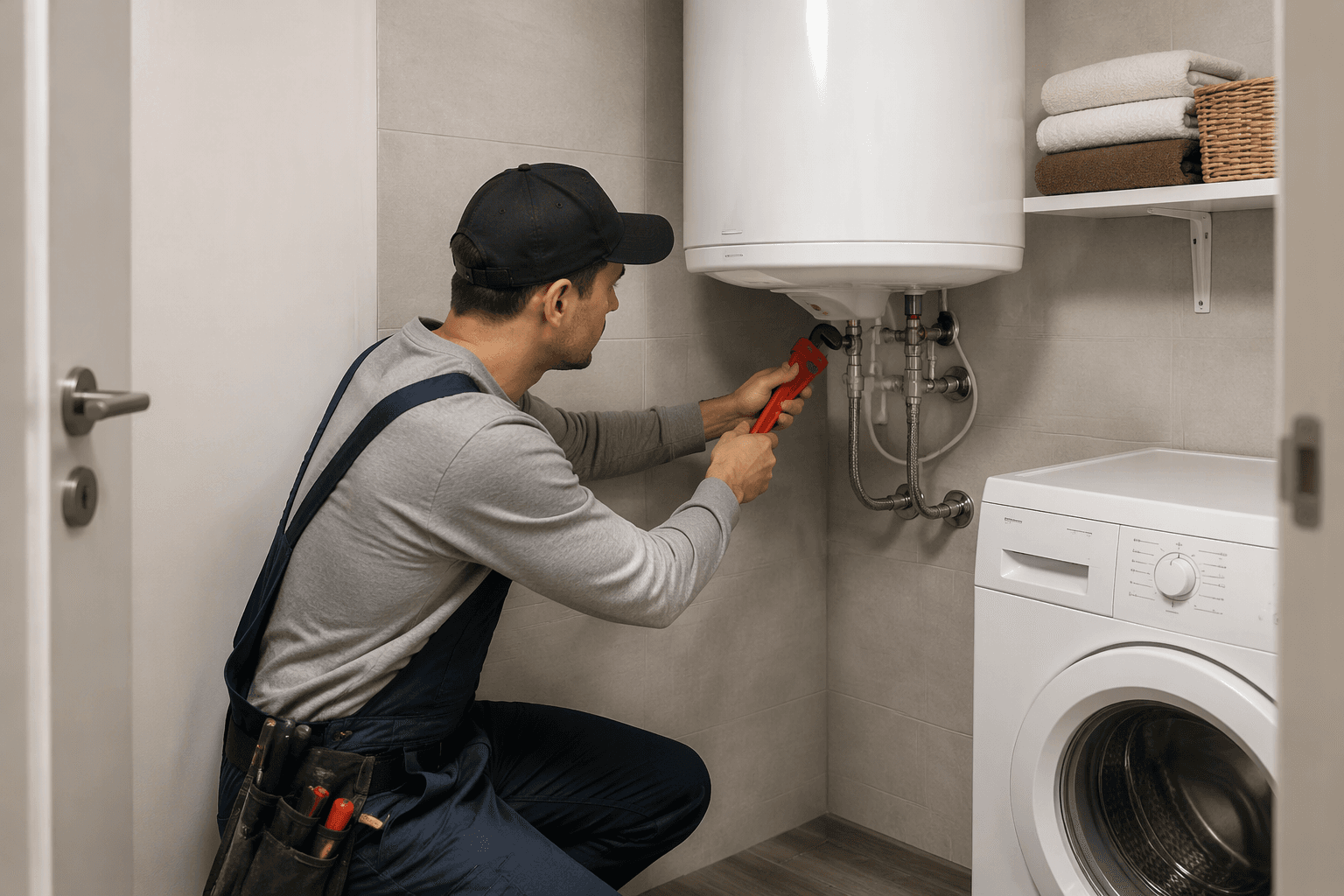
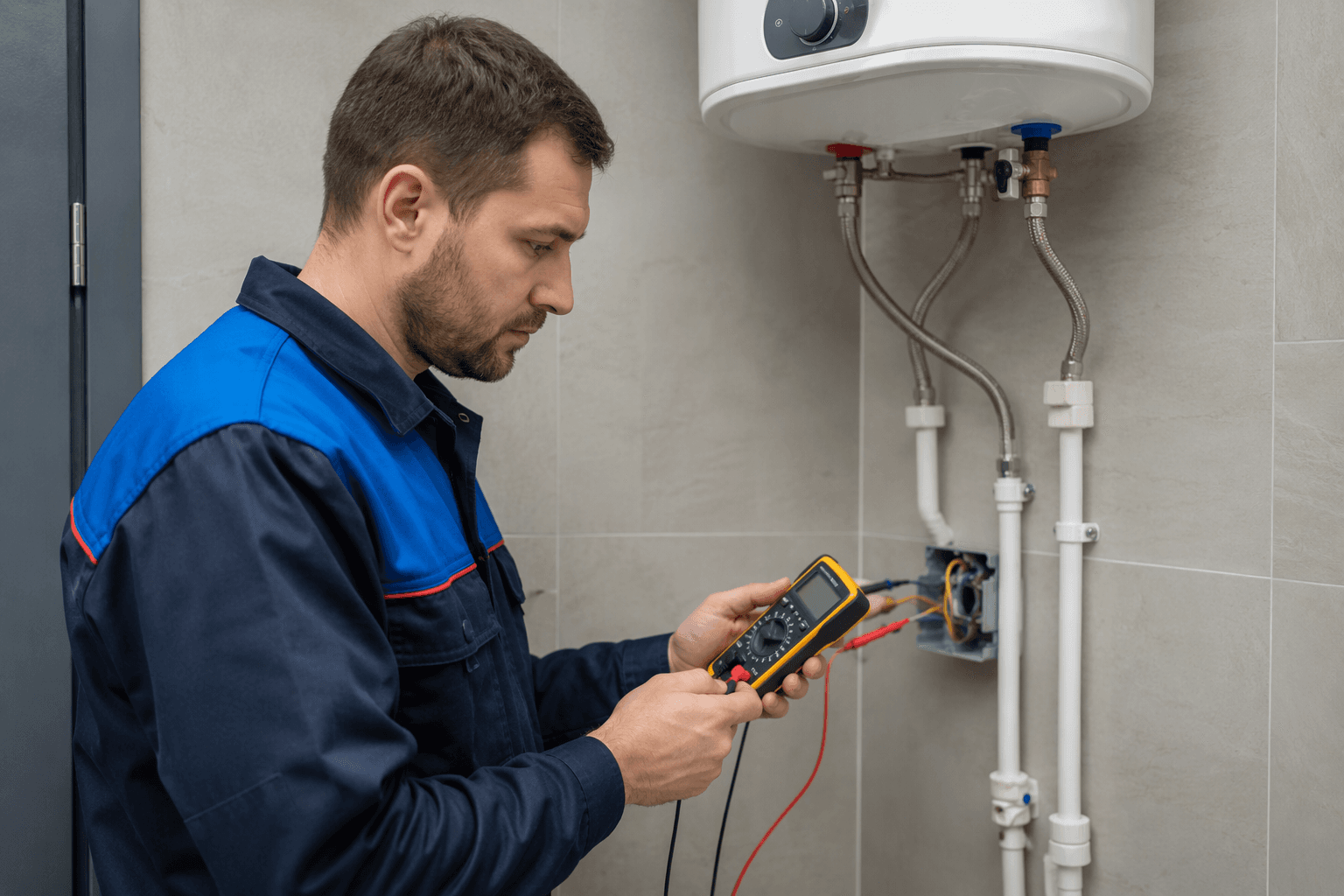
| Geyser repair (element/thermostat) | R3,500-R4,500 | Fixed / quote-specific |
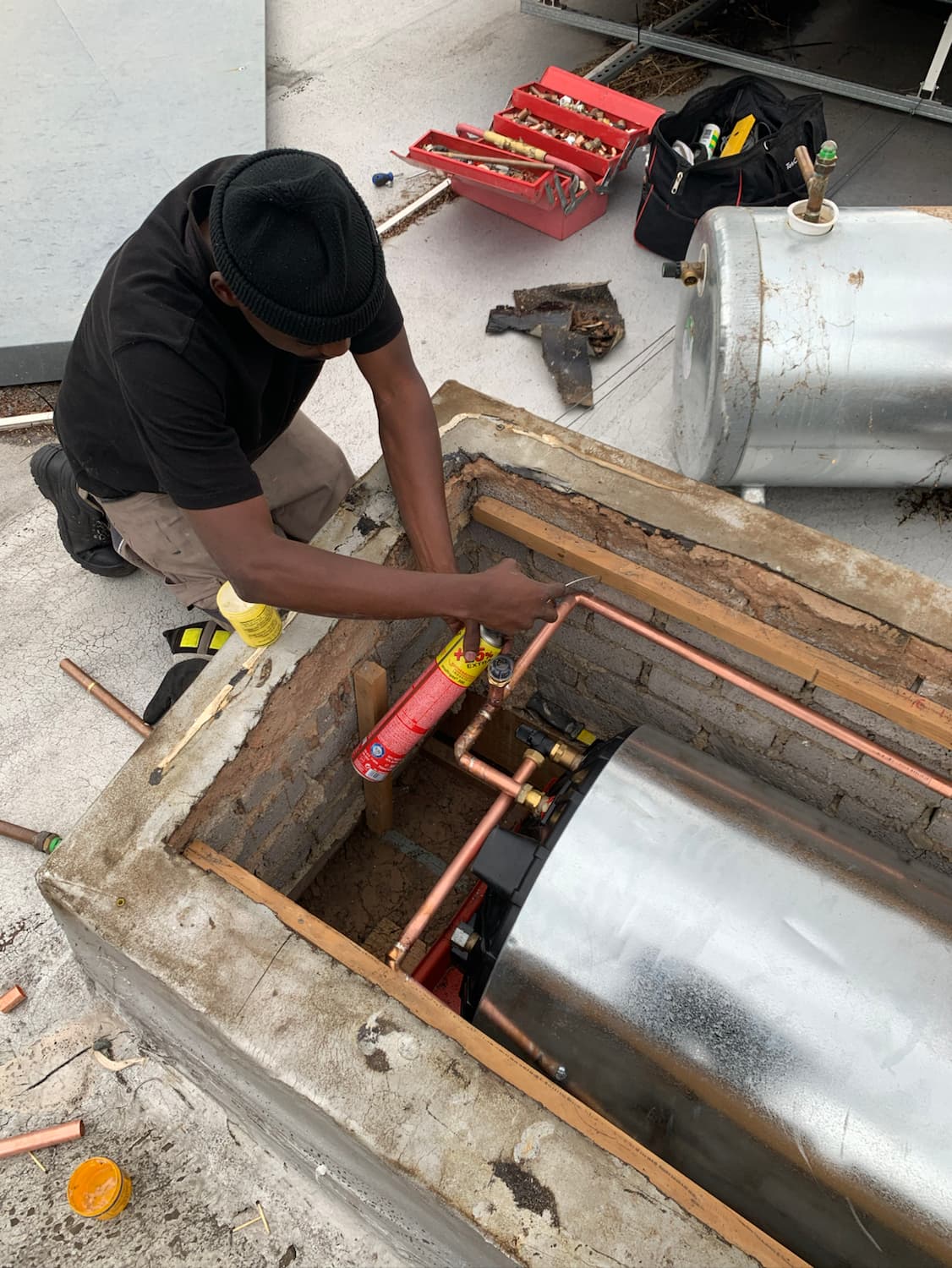
| Geyser replacement | R5,000-R15,000 (labour-only R2,500-R2,900) | Fixed / quote-specific; notifiable work |
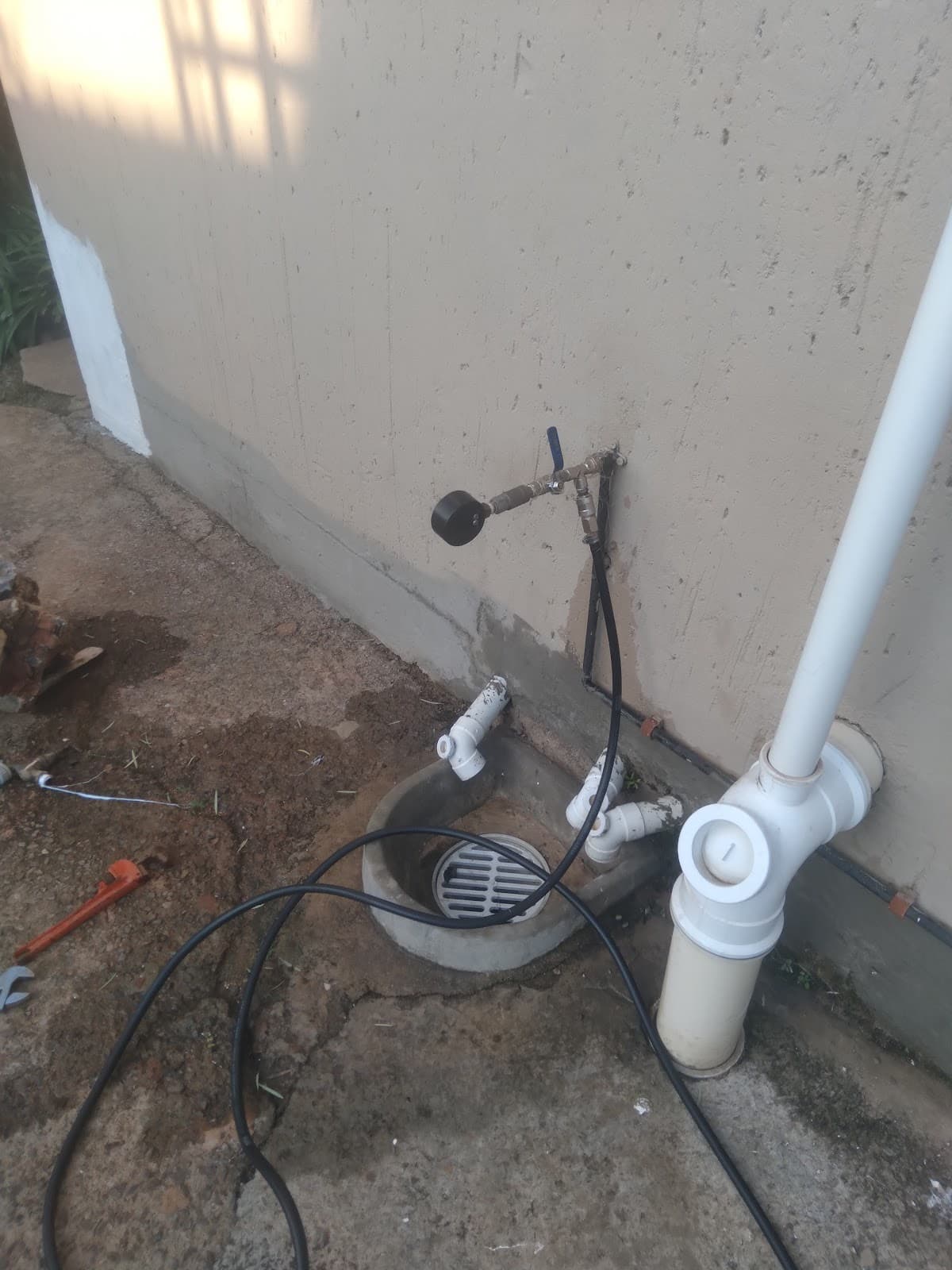
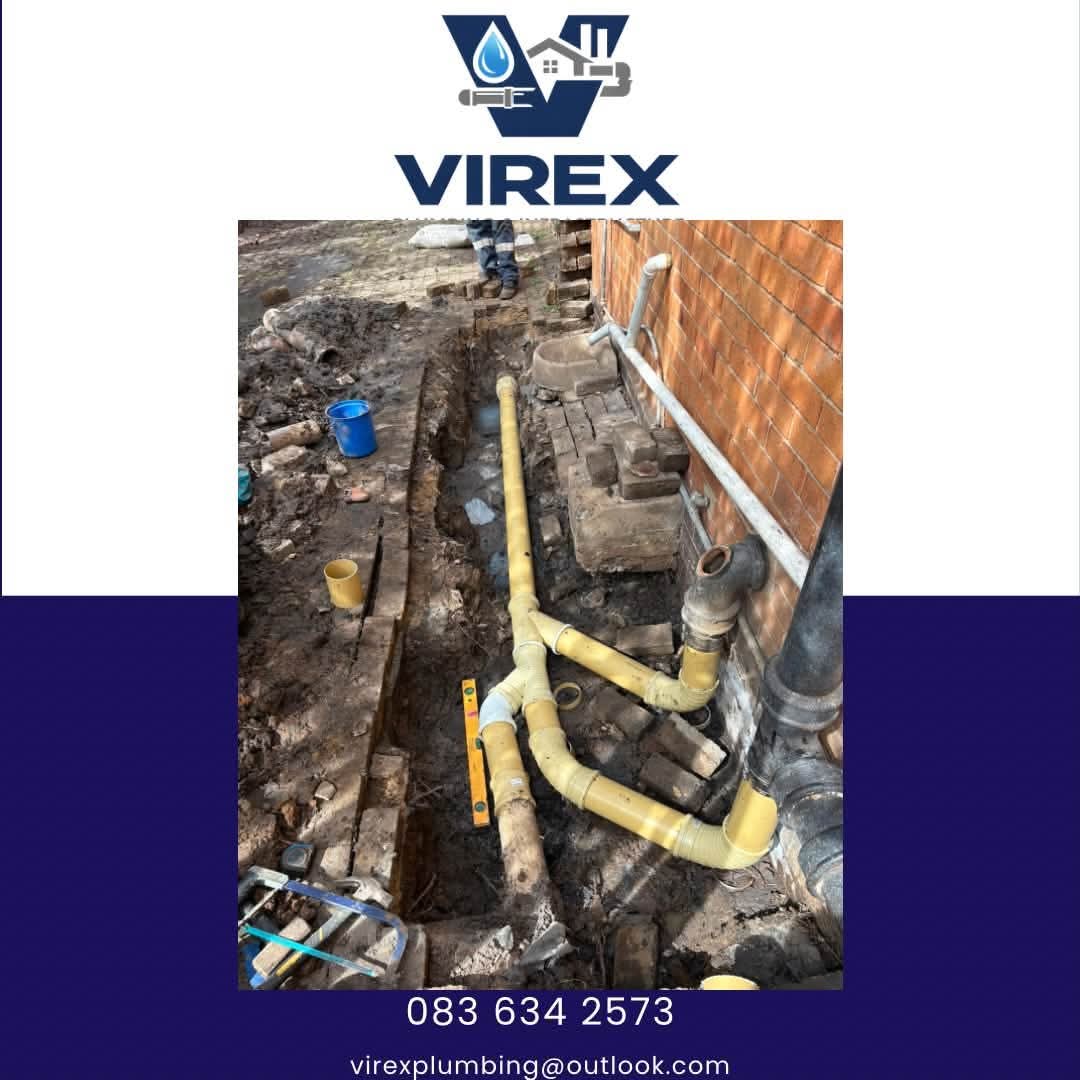
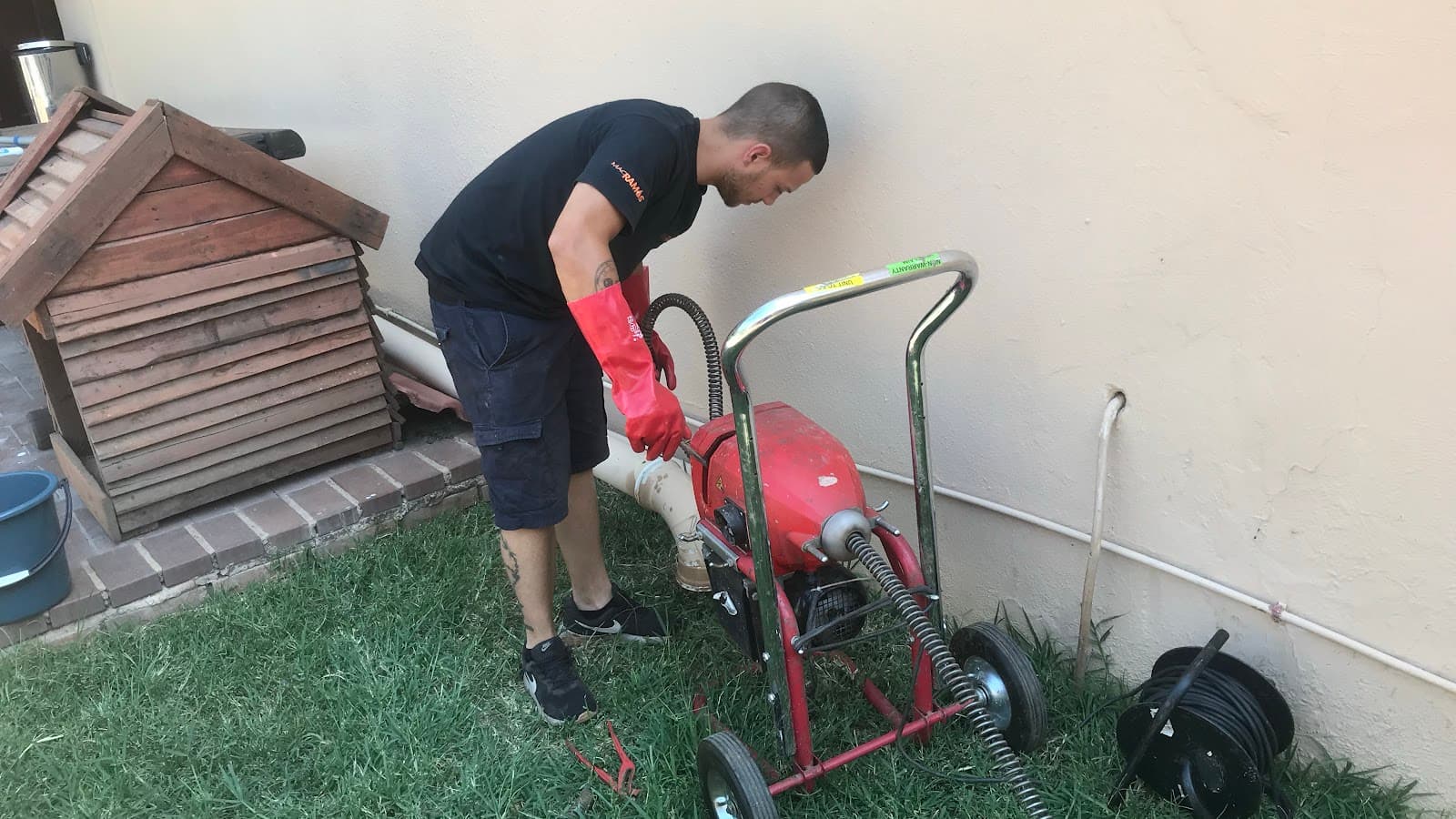
| Blocked drain clearing | R500-R1,500 | Fixed by method (rodding, jetting, CCTV) |
| Leak detection | around R600/hour | Hourly |
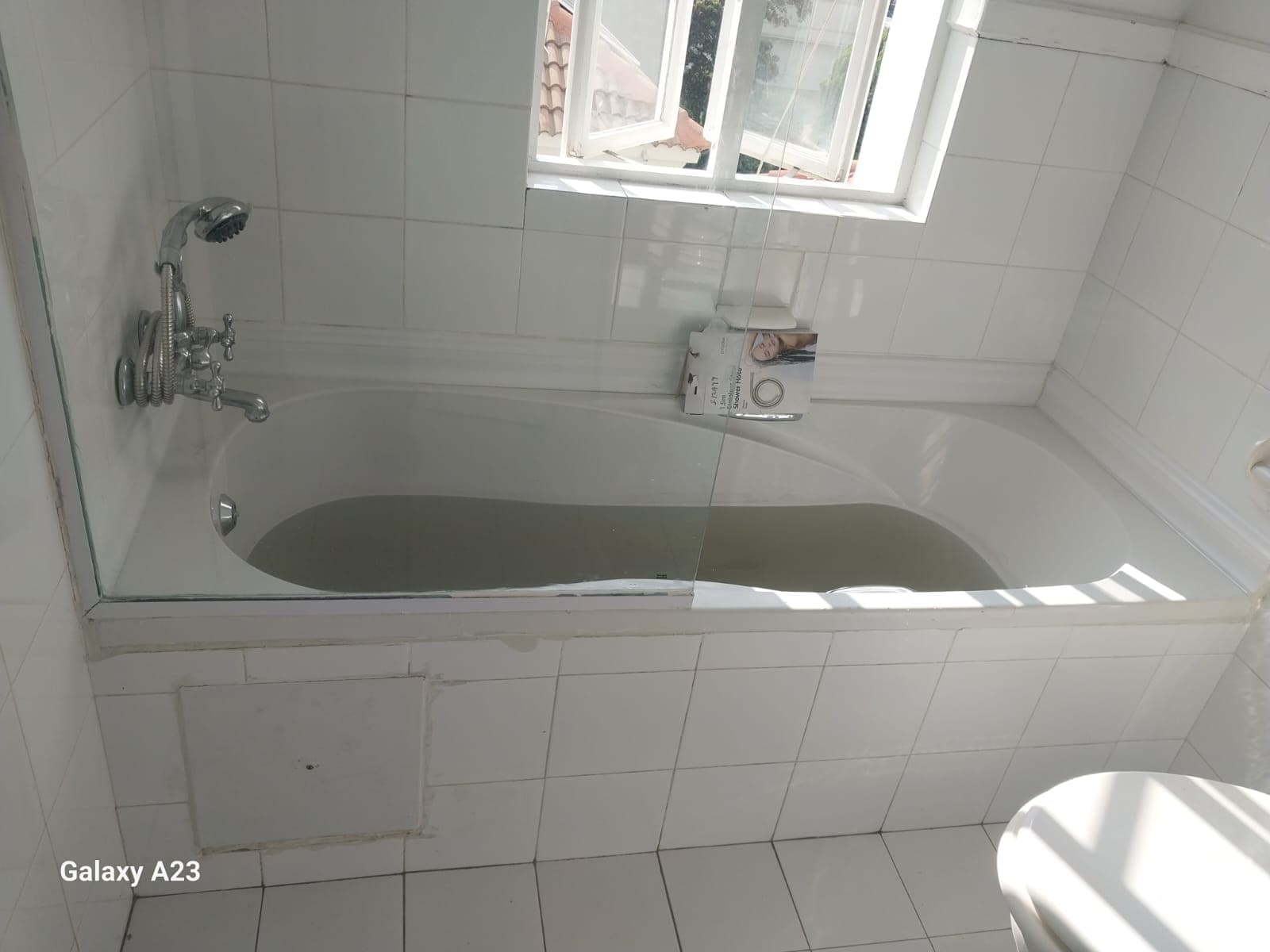
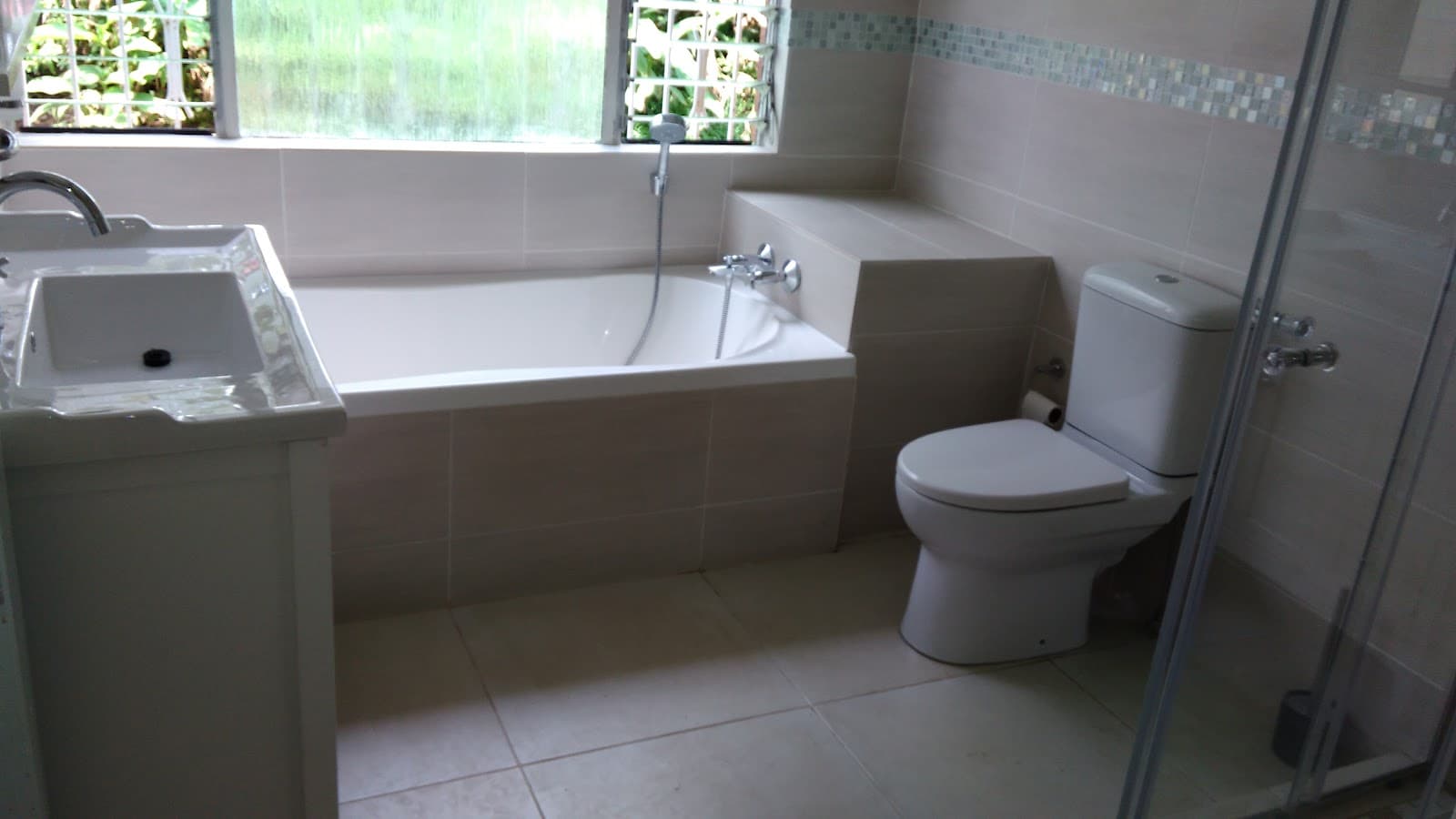
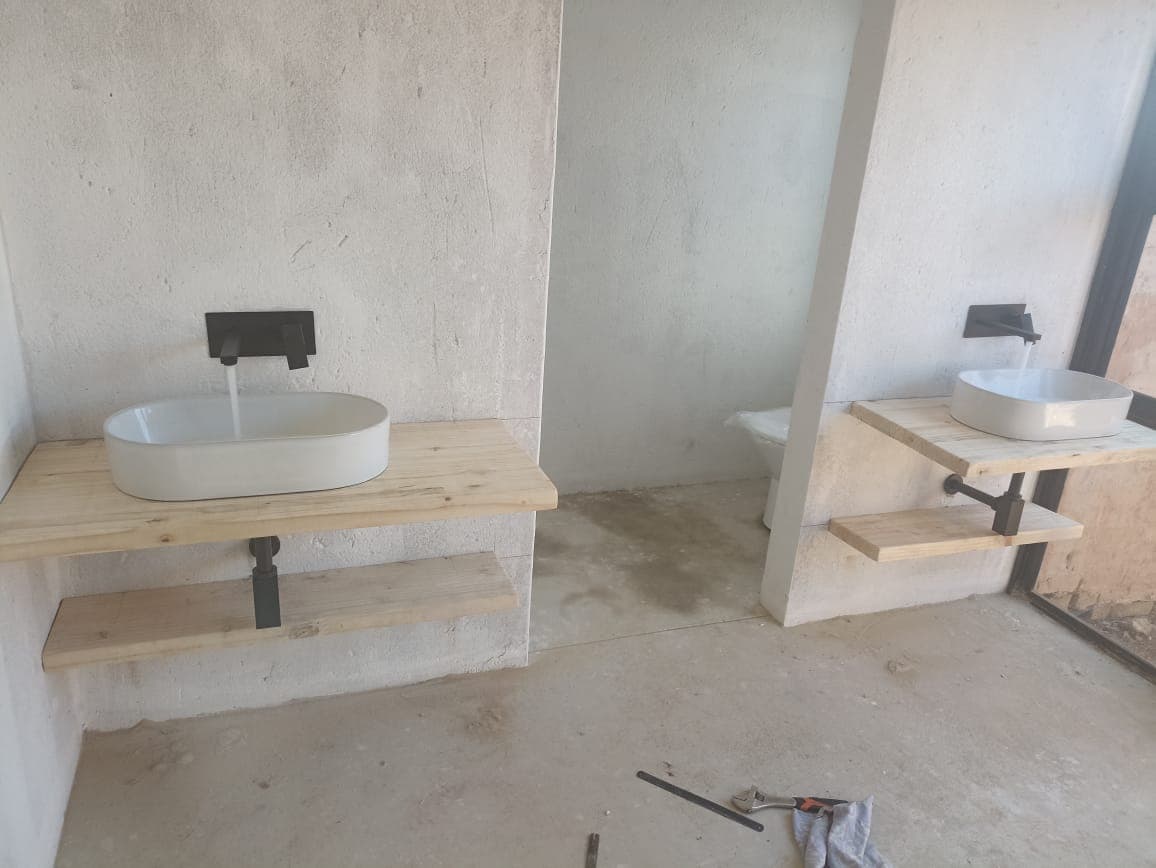
| Bathroom wet-area plumbing | around R9,500 | Fixed / quote-specific; notifiable (new points) |
| Call-out fee (published operator) | flat R350 | Fixed - covers inspection and diagnosis |
Two decisions the numbers make arithmetic instead of hope. Repair vs replace: a failed element in a geyser well past its 8-12 year design life - a R3,500-R4,500 repair - is often the cheaper long-term path to a R5,000-R15,000 replacement, done properly with permit and COC; the spread on replacement is the unit (100L/150L electric at the bottom, 200L at the top, solar above the range). Drain method: the R500-R1,500 range is three different jobs - rodding for soft blockages, jetting for serious ones, and the CCTV camera inspection at the top, which is the one worth paying for whenever a blockage recurs because it tells you whether the honest fix is jetting, relining or replacement. If several properties on your street are backing up at once, stop - that is the municipal trunk line, a City of Johannesburg matter, not your invoice. The geyser fault guide and drain clearing guide work through both in detail.
The big-ticket jobs, itemised
The three jobs that dominate a Midrand plumbing budget - geysers, wet areas and full drain work - are worth pricing out separately, because each has a cost structure of its own. Geyser replacement (R5,000-R15,000 all-in) splits into the unit and the installation: standard 100L/150L electric units sit at the bottom, 200L and large-capacity units at the top, solar above the range, and the labour-only figure (R2,500-R2,900) tells you how much of the price is the tank versus the hands. It is notifiable work, so the quote should also name the City of Johannesburg plan approval and the COC - ask whether those are included, because a compliant install is what your insurer's water-damage cover keys off. The repair-versus-replace arithmetic sits inside this job: a R3,500-R4,500 element repair on a geyser well past its 8-12 year design life is usually the cheaper long-term path to a proper R5,000-R15,000 replacement, and the geyser fault guide does that calculation against the published ranges. Bathroom wet-area plumbing (around R9,500 in the recent published Midrand jobs) is a project price, not a call-out: it covers new points and drainage and supply changes to SANS standards, and it is the other classic notifiable job - the permit and the COC belong in the quote, not the surprise. Full drain reconstruction - a section replacement or relining when the camera shows structural failure - prices as reconstruction rather than clearing, and it is the job behind the top of the drain range and beyond it. The pattern across all three: the number you remember is the unit or the job, but the compliance lines are what make it a finished, insured, transferable job. When the diagnosis points at one of these, the professional walks you through which lines move and why - and the table above is the frame to check every line against.
What moves the price inside the range
- Urgency. A job that can wait 24 hours is routinely a different (lower) number than the same job at 2 a.m.
- Access. Estate gates and body-corporate windows add time - ask whether access time is billed, and send the gate instructions with the request so it is billed once, not twice.
- Materials. Copper vs plastic, fixture tier and geyser capacity dominate replacement budgets - a professional prices both options so you choose with open eyes.
- Distance. The fringe suburbs (Ivory Park, Clayville, Olifantsfontein, Rabie Ridge) carry an honest commute premium on emergencies from centrally based operators.
- Compliance. Notifiable work carries the JDA e-building plan-approval process and the COC - budget for the process, not just the tap.
Two quotes, two prices: a worked example
Take the most common mispriced job in the market: a blocked kitchen drain that keeps coming back. Quote one: a R500 rod, same afternoon, job done - until it is back in six weeks, and six weeks later. Quote two: the CCTV inspection at the top of the R500-R1,500 range that shows root incursion at the third joint, then jetting plus root cutting priced as a package. The first quote is cheaper on the invoice and more expensive on the year - it priced the symptom, not the cause, and the range exists precisely because "a drain" is three different jobs. The same arithmetic runs on timing: a geyser element that fails on a Friday afternoon books inside the standard R400-R900 band, while the same failure at 2 a.m. on a public holiday bills the first hours at the R600-R1,300 emergency rate before the repair even starts - the repair itself still prices inside the standard R3,500-R4,500, but the hour you bought has a different price tag. On access: a centrally based operator quoting a home in Ivory Park or Clayville is carrying an honest commute premium on an emergency that a local base does not. And on the compliance axis: the same geyser replacement quoted at R8,000 without the COC and R9,500 with plan approval and the certificate included is not a R1,500 price gap - it is two different products, one of which is your insurance cover. Reading a quote this way - which variables did this operator price - is what separates a number you can defend from a number you can only hope holds.
Comparing quotes fairly
Compare on three axes, in this order: all-in price with conditions (what is included, what changes the number, whether the call-out is deducted - a "package" that hides a R1,300/hour emergency rate is a trap with good typography); commitments in writing (arrival window, warranty period, COC for notifiable jobs - verbal commitments do not survive the invoice); and track record (the verbatim public reviews on this directory). Three to five quotes is the norm for anything above a few hundred rand, and this directory makes it free: one request, all matched pros, one screen. Midrand's ranges sit inside the wider Gauteng band - not a Midrand premium - and 44 competing operators across the corridor is what keeps the band honest. All figures above are published benchmarks researched on 2026-09-30, not quotes: your job's final price is set by the provider after assessment, and when it sits outside a defensible part of the band, the ranges on this page tell you exactly which questions to ask.
Keeping the quote honest: deposits, warranties and the invoice
Three documents are what turn a benchmark into a held-to-number price. The itemised quote - labour, materials and call-out fee on separate lines - is the baseline the Consumer Protection Act expects, and the only document that makes two numbers comparable; a "package" that refuses itemisation is pricing the symptom in the first place. The deposit - a deposit against a big ticket like a geyser unit is normal; full prepayment for work that has not happened is not, and the balance follows the agreed terms and the tested work. The invoice - it should match the accepted quote line for line, state the emergency rate where it applied, and be a tax invoice rather than a handwritten receipt; the written workmanship warranty (12 months on labour is the baseline) rides with it, and the COC where the job was notifiable. If the final bill diverges from the quote without a fresh, agreed scope change, that document is your leverage - the act gives consumers recourse against substandard work, and the paper trail is what makes the recourse work. None of it costs anything: the sequence - itemise, deposit for materials only, an invoice that matches - is the part of the pricing process the published ranges exist to be checked against, and the operators on this directory who show their pricing model on the listing are the ones most likely to hold all three documents up to it.
What the benchmarks deliberately do not cover
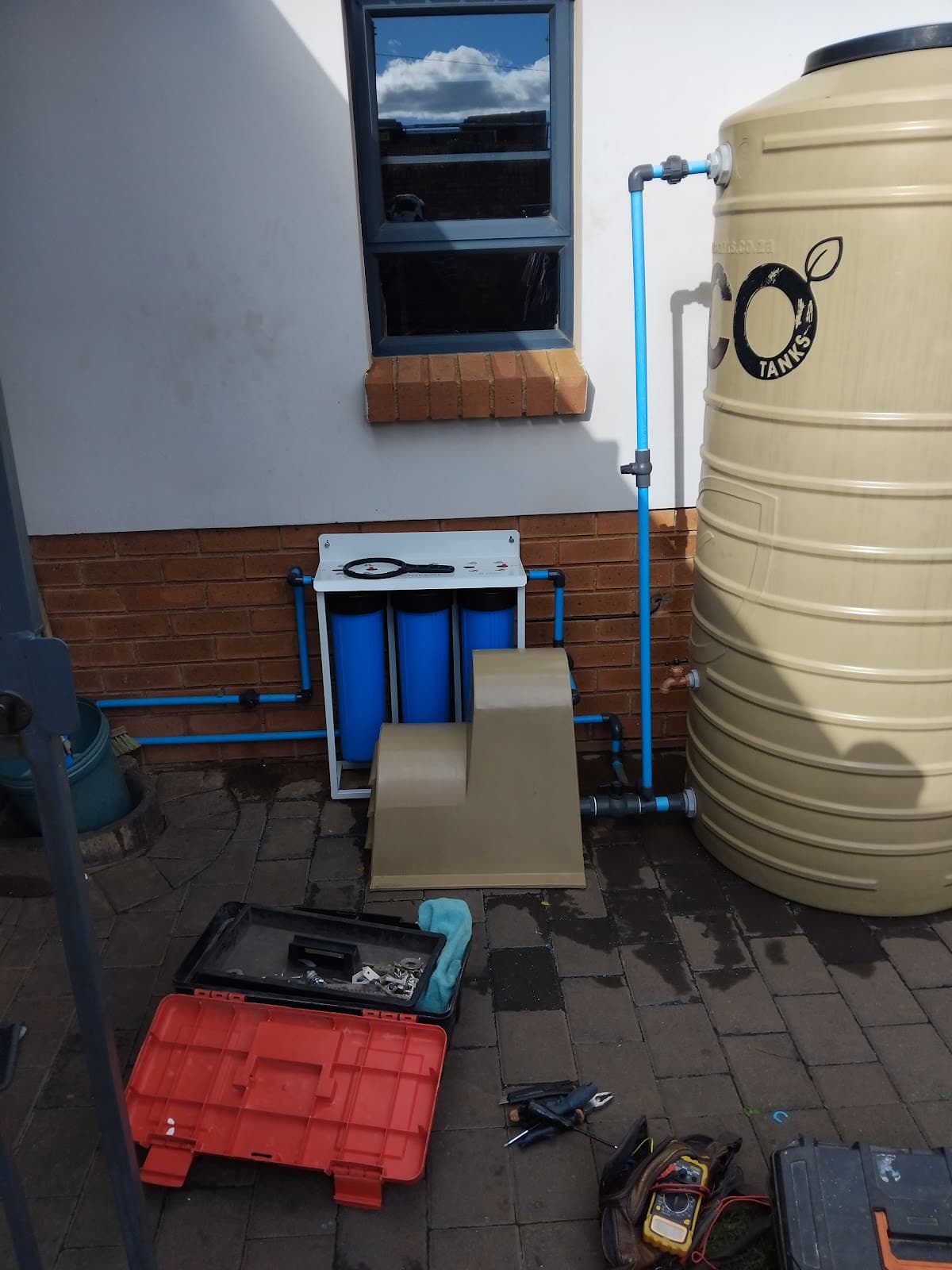
The table above is the published market, and its edge is where the honesty starts. Several categories a Midrand homeowner will actually need have no verified published benchmark - water tanks and backup systems (the borehole and credit-control work), drain relining and section replacement (priced as reconstruction, not clearing), solar geyser systems (above the electric range, priced by roof and load) and whole-house repiping projects - and the directory leaves them unpriced rather than filling the gap with a number that looks authoritative and is not. The consequence for you is specific: these jobs quote individually, the comparison logic shifts from "inside the range" to "itemised and explained", and the three documents that matter most - the itemised quote, the written warranty, the COC where notifiable - matter even more, because the benchmark that would catch a bad number is not there. Ask for the line items, ask what each one is for, and compare operators on the shape of the quote as much as the bottom line: two reconstruction jobs priced very differently are usually two different scopes, and the itemisation is the only way to see which. That is the part of the cost story the table cannot tell, and it is why the published ranges on this page are framed as a starting point for comparison, never as a quote.
How this guide was researched
This price guide was compiled by the directory's research team from public sources accessed on 30 September 2026 and reviewed against the standards the figures depend on: PIRB registration and the public register, SANS 10400-H and the plumbing codes published through SABS, the Consumer Protection Act 68 of 2008, and the City of Johannesburg's building-permit process. Every figure is a published benchmark or a provider-published rate - none were invented, and the categories with no published benchmark are left without one rather than filled with a guess. The directory is independently operated, with no affiliation to any listed provider, and the pay-per-lead model means no operator can buy a position in it. If a number here does not match the quotes you are receiving, the discrepancy belongs with the sources, not with the narrative - and that is a check you can run yourself with the links below.
Sources & references
Accessed 30 September 2026. Price figures are the published benchmarks cited in this guide.
- Published hourly plumber rates (ProCompare)
- Published emergency call-out rates (ProCompare)
- Published geyser installation labour costs (ProCompare)
- Recent Midrand plumbing jobs and prices (ProCompare)
- Geyser replacement cost guide (Plumber Price List)
- Published drain-clearing and leak-detection rates (Plumber Rates)
- A Gauteng plumbing cost guide (Fourways Plumber)
- A Midrand operator publishing a flat call-out fee
- A Midrand operator publishing geyser pricing
- The Consumer Protection Act, 68 of 2008
The benchmark is the frame, the itemised quote is the number, and the documents are what make the number hold. When a quote lands outside a defensible part of the published range - above or below - you now know exactly which lines to ask about before the van leaves.